What is Design Thinking ?
Design Thinking
Design as a professional discipline has undergone a tremendous evolution in the last generation from a practice focused mainly on the aesthetic style to one with a clear and explicit focus on the “user” (aka: person or group of people who use a product or service) and their hopes, desires, challenges, and needs. By establishing empathy with the user, designers are able to work toward outcomes that meet those needs more successfully. This user-centered approach known as “design thinking” enables designers and others to address a wide range of complex business and social issues.
So we need to be clear about the definition of Design and Design Thinking.
Design is the intent behind an outcome.
Design Thinking is a human-centric approach to solve problems.
Design Thinkers don’t try to search for a solution until they have determined the real problem, and even then, instead of solving that problem, they stop to consider a wide range of potential solutions. Only then will they finally converge upon their proposal. This process is called .”Design Thinking”—Don Norman, author, The Design of Everyday Things

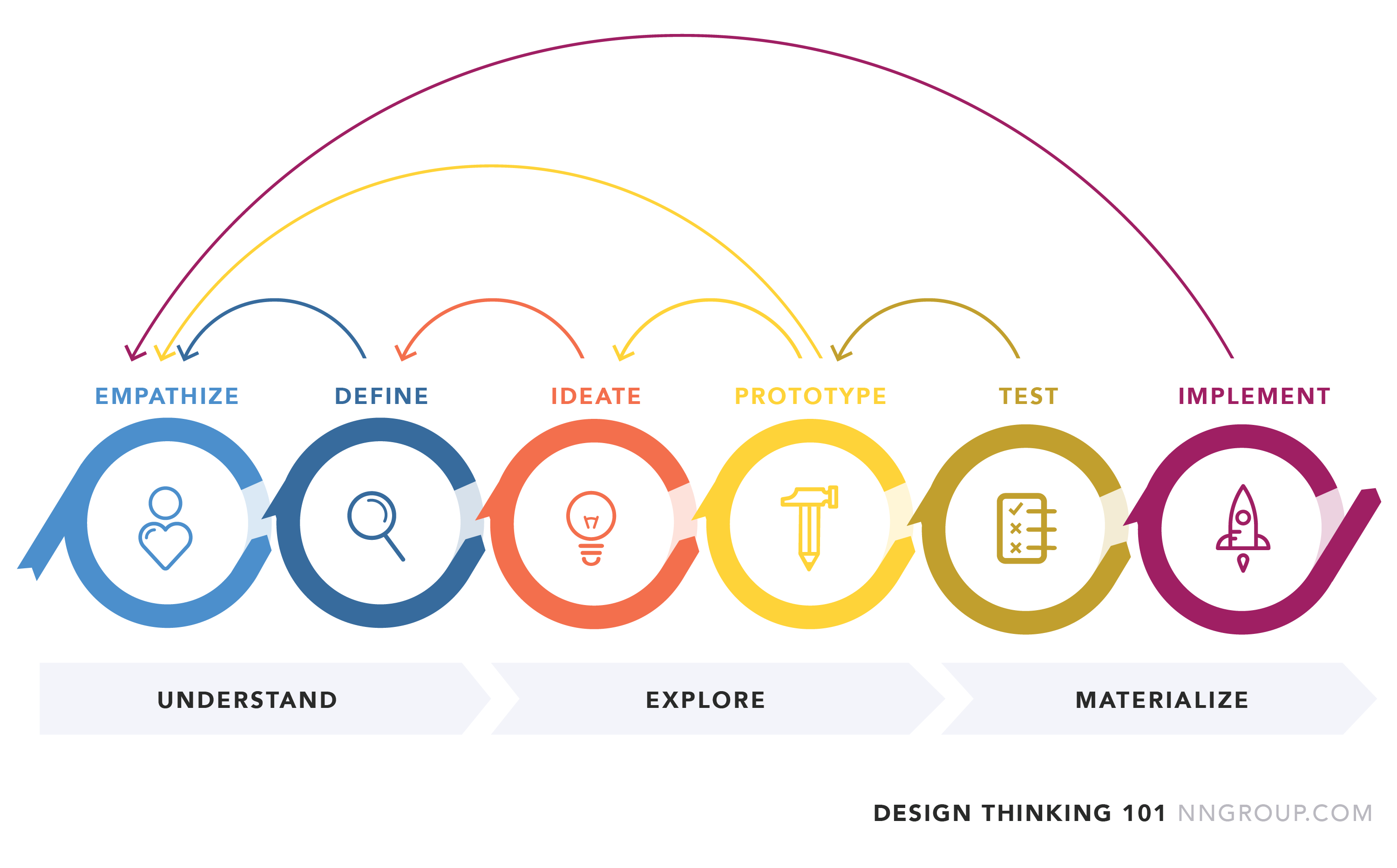
Design thinking is a continuous user-centered process to conceive of and create a successful product, service, or process. This process is often defined in a loop that draws upon empathy, intuition, inquiry, and reasoning to identify user needs, imagine and explore ways of solving those needs and create prototypes to test these needs. This loop when looked at as a linear process can be broken down into 6 steps of Empathize, Define, Ideate, Prototype, Test, and Implement which can be classified into 3 Main Categories of Understand, Explore, and Materialize.